Yoga Poses for Beginners — Complete Guide with Step-by-Step Instructions
By Unisoul Team-31 May 2026-19 min read
Complete yoga guide for beginners — 5,000 years of history, Patanjali's 8 limbs, science behind yoga poses, step-by-step instructions for 6 essential poses, common mistakes to avoid, and how to find certified yoga classes in Indore.
Yoga Poses for Beginners — Complete Guide with Step-by-Step Instructions | Unisoul Health
India gave yoga to the world — yet millions of Indians have never learned even the most basic poses correctly. Whether you are a complete beginner or someone returning to the mat after years away, this guide covers everything you need to know — where yoga came from, why individual poses matter, the science behind the practice, and step-by-step instructions for 6 essential poses you can start today.
Important: Yoga practices in this article are based on traditional knowledge recognised by the Ministry of AYUSH, Government of India. All health benefit mentions use the phrase "may help" — individual results vary. If you have any medical condition, injury, or are pregnant — consult a qualified doctor before starting yoga. References: Ministry of AYUSH — moayush.gov.in | ICMR — icmr.gov.in
The Origin of Yoga — Where Did It Begin?
Yoga is one of the world's oldest known wellness traditions — originating in India over 5,000 years ago. The word "yoga" comes from the Sanskrit root yuj, meaning to yoke or unite — representing the union of mind, body, and spirit.
"Yoga is the journey of the self, through the self, to the self."
— The Bhagavad Gita
5K
3000 BCE — PRE-VEDIC PERIOD
The earliest evidence of yoga-like practices appears in the Indus Valley civilisation. Stone seals depicting figures in meditative postures were discovered at Mohenjo-daro and Harappa.
V
1500 BCE — VEDIC PERIOD
The Rigveda — one of the oldest sacred texts — contains the first written mentions of yoga. This period focused on rituals, chanting, and breath control as spiritual practices.
U
800–400 BCE — UPANISHADIC PERIOD
The Upanishads introduced the concept of self-inquiry and the connection between individual consciousness and universal consciousness — forming the philosophical foundation of yoga.
P
400 CE — PATANJALI'S YOGA SUTRAS
Sage Patanjali systematised yoga into 196 aphorisms — the Yoga Sutras. He defined the eight limbs of yoga (Ashtanga), of which physical postures (asanas) are just one part.
M
MODERN ERA — 20TH CENTURY
Teachers like Swami Vivekananda, Tirumalai Krishnamacharya, B.K.S. Iyengar, and Pattabhi Jois brought yoga to the world. Today yoga is practised by over 300 million people globally.
UN
2014 — INTERNATIONAL YOGA DAY
The United Nations declared 21 June as International Yoga Day — proposed by India's Prime Minister. This was the largest yoga gathering in history on its first day.
The Eight Limbs of Yoga — What Most People Don't Know
Most people think yoga is just physical exercise. But Patanjali's Yoga Sutras describe eight interconnected limbs — physical postures (asanas) are only the third. Understanding this changes how you approach your practice.
🌱
1. Yama — Ethical Restraints
Non-violence, truthfulness, non-stealing, moderation, non-possessiveness. The foundation of how we relate to the world around us.
🌿
2. Niyama — Personal Observances
Purity, contentment, self-discipline, self-study, surrender. How we relate to ourselves — the inner foundation of practice.
🧘
3. Asana — Physical Postures
The physical poses — what most people call "yoga." Originally designed to prepare the body for long periods of meditation.
🌬️
4. Pranayama — Breath Control
Conscious control of breathing. Recognised by Ministry of AYUSH as a core wellness practice for mental and physical balance.
🔇
5. Pratyahara — Withdrawal of Senses
Turning attention inward — away from external distractions. The bridge between the outer and inner limbs of yoga.
🎯
6–8. Dharana, Dhyana, Samadhi
Concentration, meditation, and enlightened absorption. The deepest inner limbs — where yoga becomes a complete way of living.
Why Do Yoga Poses (Asanas) Matter?
Patanjali defined an asana as a posture that is "steady and comfortable" — sthira sukham asanam. Each pose was originally designed not for fitness but to prepare the body and nervous system for deeper meditation and inner awareness.
Over centuries, yoga teachers refined hundreds of poses — each targeting specific areas of the body, specific energy flows (prana), and specific mental states. When you hold a pose with correct alignment and conscious breathing, you are doing much more than stretching a muscle.
Physical Dimension
Poses may help build strength, improve flexibility, support joint health, and correct postural imbalances developed from modern sedentary lifestyles.
Breath Dimension
Every pose is linked to breathing. The combination of posture and breath may help regulate the nervous system and support a calmer mental state.
Awareness Dimension
Holding a pose with full attention trains the mind to stay present — this is the beginning of meditation in movement.
Reference: Patanjali's Yoga Sutras | Ministry of AYUSH, Government of India | B.K.S. Iyengar — Light on Yoga
The Science Behind Yoga — What Research Suggests
Modern research institutions including AIIMS, NIMHANS, and international bodies have studied yoga extensively. Here is what current research suggests — with responsible, evidence-based language:
May support stress management
Regular yoga practice may help the body's natural response to everyday stress. ICMR and AYUSH both recognise yoga as a complementary wellness practice for mental balance.
May improve flexibility over time
Consistent practice may gradually improve range of movement in joints and muscles. Results vary significantly based on starting point and regularity of practice.
May support mental clarity
Several studies suggest regular yoga and meditation practitioners report improved concentration and reduced mental fatigue. Individual results vary.
May contribute to better sleep
Evening or restorative yoga practice may help some practitioners wind down more effectively. NIMHANS research supports yoga as a complementary approach for sleep wellness.
References: AIIMS Wellness Research | NIMHANS — nimhans.ac.in | ICMR — icmr.gov.in | Ministry of AYUSH — moayush.gov.in
6 Essential Yoga Poses for Beginners — Step-by-Step Guide
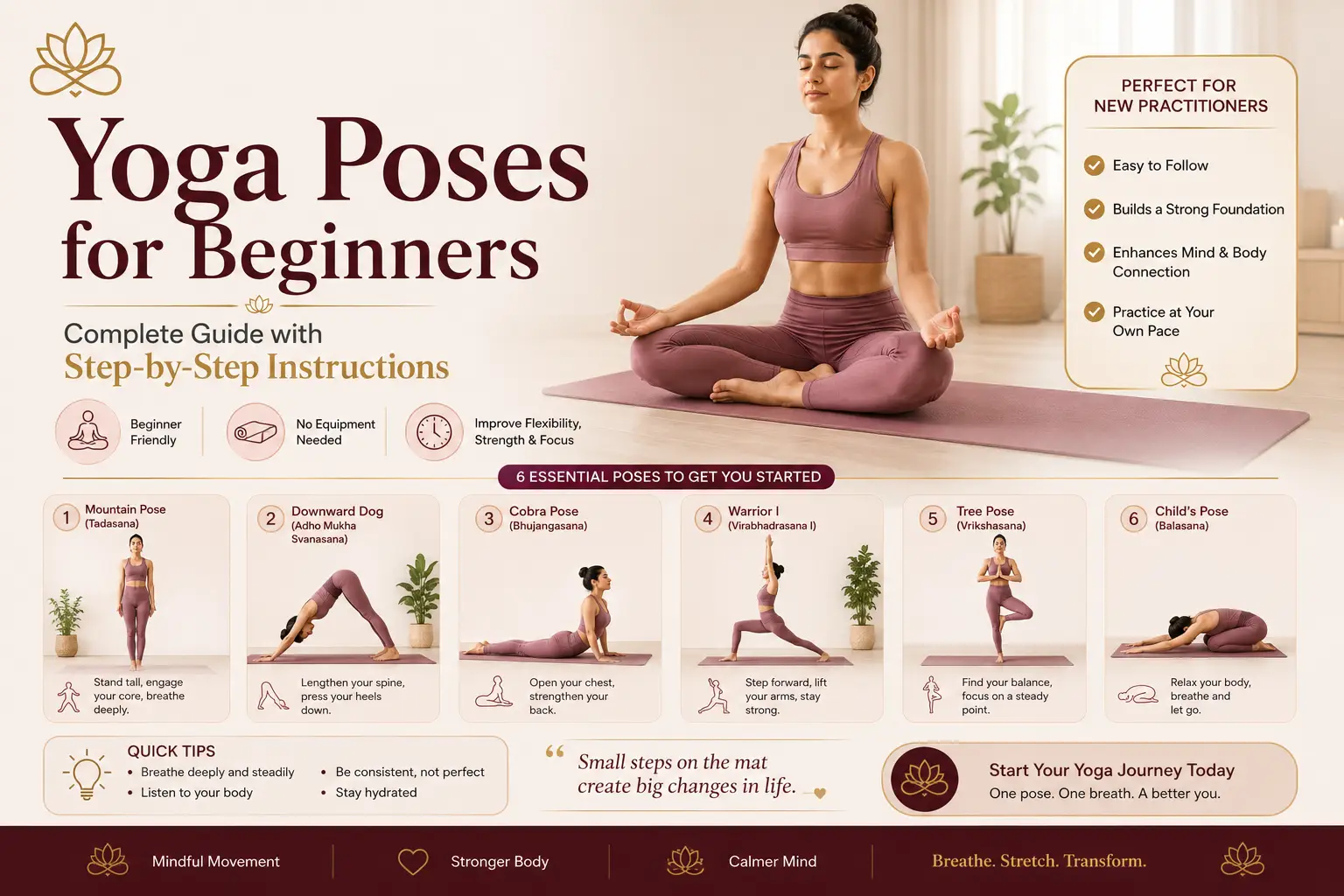
These 6 poses form the foundation of most beginner yoga sequences. Select any pose below to see full step-by-step instructions, recommended hold times, and possible benefits:
🧘 Interactive Pose Guide
Select a pose to see full instructions
🏔️ Mountain Pose — Tadasana
Beginner · Foundation of all standing poses · Hold 30–60 seconds
⏱ Hold: 30 – 60 seconds
1Stand with feet together, big toes touching, heels slightly apart
2Distribute weight evenly across both feet — not leaning forward or back
3Engage your thighs gently, lift your kneecaps without locking the knees
4Lengthen your spine — imagine a string pulling the crown of your head upward
5Relax your shoulders away from your ears, arms alongside the body
6Breathe deeply and hold for 30 to 60 seconds
PostureBalanceGroundingBeginner
Practice under guidance of a certified instructor. Stop if you feel any discomfort. Not a substitute for medical advice.
🐱 Cat-Cow Stretch — Marjaryasana
Beginner · Gentle spinal warm-up · 8–10 rounds
⏱ 8 – 10 slow rounds, coordinated with breath
1Start on hands and knees — wrists below shoulders, knees below hips
2Inhale — drop your belly, lift your chest and tailbone upward (Cow position)
3Exhale — round your spine toward the ceiling, tuck chin and tailbone (Cat position)
4Move slowly — each movement synchronized exactly with your breath
5Repeat 8 to 10 times at a comfortable, gentle pace
Practice under guidance of a certified instructor. Stop if you feel any discomfort.
⚔️ Warrior Pose I — Virabhadrasana
Beginner–Intermediate · Hold 30–45 seconds each side
⏱ Hold: 30 – 45 seconds each side
1Stand and step your left foot back about 3 to 4 feet
2Bend your right knee to 90 degrees — knee directly over ankle
3Turn your left foot out to 45 degrees, keep left leg straight and strong
4Raise both arms overhead, palms facing each other
5Keep hips square to the front, gaze forward and slightly upward
6Hold 30 to 45 seconds, then switch sides
Leg StrengthHip FlexibilityCore StabilityStamina
Practice under guidance of a certified instructor. Avoid if you have knee or hip injuries.
🌲 Tree Pose — Vrikshasana
Beginner · Balance pose · Hold 30–60 seconds each side
⏱ Hold: 30 – 60 seconds each side
1Stand in Mountain Pose, fix your gaze on a still point directly ahead (drishti)
2Shift weight to your right foot, slowly lift your left foot off the floor
3Place your left sole on your inner right thigh or calf — never on the knee joint
4Bring palms together at the chest, or raise arms overhead like branches
5Breathe steadily — hold 30 to 60 seconds, then switch sides
BalanceConcentrationHip OpenerAnkle Strength
Beginners may practice near a wall for support. Stop if you feel knee discomfort.
🐶 Downward Facing Dog — Adho Mukha Svanasana
Beginner–Intermediate · Full body pose · Hold 30–60 seconds
⏱ Hold: 30 – 60 seconds
1Start on hands and knees — hands slightly forward of shoulders, fingers spread wide
2Exhale and lift your knees off the floor, straightening your legs
3Push your hips upward and back — body forms an inverted V shape
4Press your hands firmly into the floor, keep arms straight
5Let your head hang naturally between your upper arms
6Hold 30 to 60 seconds breathing deeply through the nose
Full Body StretchBack ReliefArm StrengthHamstrings
Avoid if you have wrist injuries or high blood pressure. Consult instructor before attempting.
💀 Corpse Pose — Savasana
All levels · Final relaxation · 3–5 minutes — never skip this pose
⏱ Minimum 3 – 5 minutes — longer is better
1Lie flat on your back — legs slightly apart, feet falling naturally outward
2Arms alongside the body, palms facing upward, fingers gently curled
3Close your eyes and consciously release all muscular effort
4Breathe naturally — let each exhale soften and deepen your relaxation
5If the mind wanders, gently return attention to the breath
6Stay completely still for 3 to 5 minutes — this is when the body integrates the practice
Deep RelaxationStress ReliefIntegrationMental Rest
Savasana is considered the most important pose in yoga — never skip it. It allows the nervous system to integrate the effects of the entire practice.
Common Mistakes Beginners Make — And How to Avoid Them
✗
Skipping Savasana: Many beginners leave before Corpse Pose. This is the most common mistake. Savasana is when the nervous system processes and integrates the benefits of the entire session — never skip it.
✗
Holding the breath: Yoga is breath and movement together. Holding your breath in poses creates tension — the opposite of what yoga is meant to achieve. Breathe continuously through every pose.
✗
Forcing flexibility: Yoga is not a competition. Pushing too hard into a stretch causes injury and discourages practice. The goal is steady, comfortable posture — not reaching the floor on day one.
✗
Comparing with others: Every body is different. Your neighbour's deeper forward fold is irrelevant to your practice. Eyes forward, awareness inward — that is yoga.
✗
Practicing without guidance: Correct alignment matters — especially for beginners. An incorrect pose repeated many times creates injury patterns. A certified instructor corrects these before they become habits.
✗
Expecting instant results: Yoga changes you slowly and deeply. Most practitioners notice meaningful changes after 4 to 8 weeks of consistent practice — not after one session.
How to Start Yoga — Practical Guide for Beginners
What You Need
A yoga mat, comfortable clothing, and an empty stomach (practice 2 to 3 hours after eating). No expensive equipment needed to begin.
How Often
2 to 3 sessions per week is ideal for beginners. Daily practice — even 20 minutes — is more beneficial than one long weekly session.
Best Time
Early morning is traditionally preferred. The mind is calm, the body is rested. Evening practice is equally valid and may help with stress relief before sleep.
Home vs Studio
Both work. Studios offer instructor guidance, community, and correction of alignment. Home practice offers flexibility. Beginners benefit most from starting in a studio.
Beginner tip: Start with a certified instructor for at least your first 8 to 10 sessions. This builds correct alignment habits from day one — habits that home practice alone cannot create. Once you understand the basics, home practice becomes far more effective.
Frequently Asked Questions
How long should a beginner hold a yoga pose?
Beginners are generally advised to start holding poses for 15 to 30 seconds and gradually increase to 60 seconds as comfort and strength improve. Always listen to your body — never force a hold beyond your comfortable limit.
How many times a week should a beginner practice yoga?
Most yoga teachers recommend 2 to 3 sessions per week for beginners. Consistency matters more than frequency — even 20 minutes daily is more beneficial than one long session per week.
Is yoga suitable for all ages?
Yoga can be adapted for most age groups — from children to seniors. Certain poses may not be suitable for specific health conditions. Always consult a doctor and inform your instructor of any health concerns before starting.
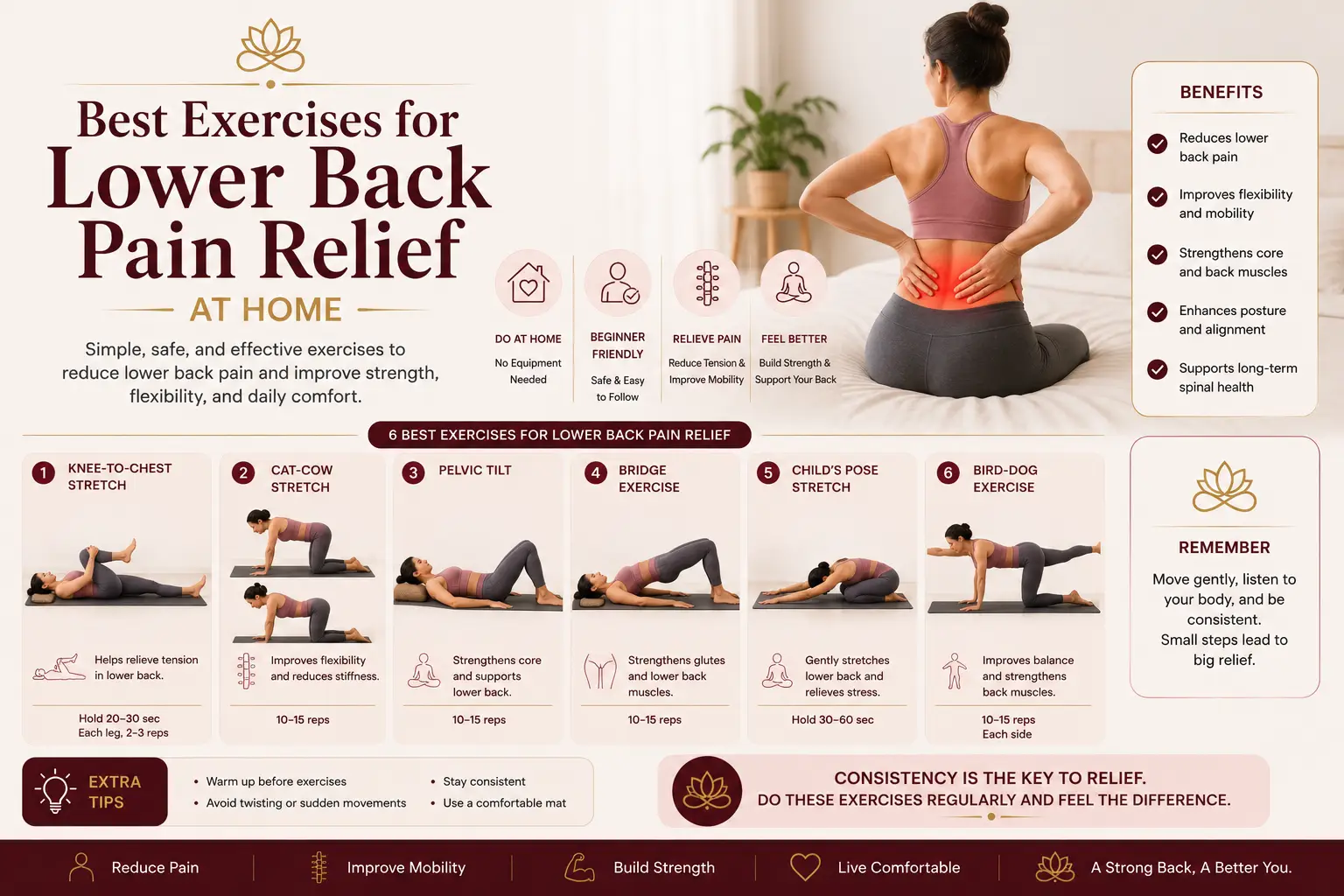
Can yoga help with back pain?
Yoga may help with posture-related upper back tension and general muscle stiffness. For chronic, severe, or injury-related back pain — physiotherapy is the clinically recommended approach. Always consult a doctor for persistent pain before beginning yoga.
Where can I find certified yoga classes in Indore?
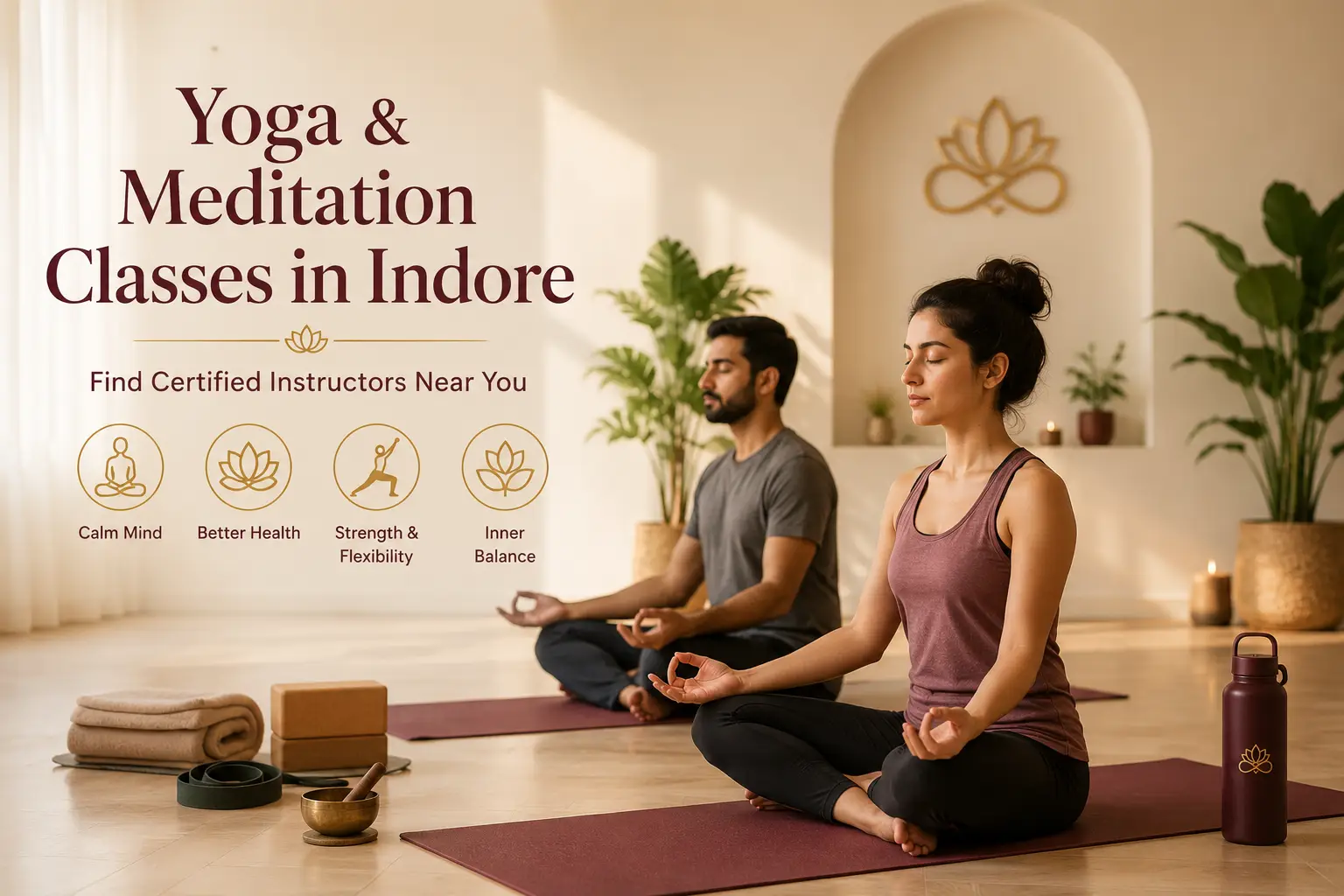
Unisoul Health lists verified yoga studios and certified instructors in Indore — with real student reviews, transparent pricing, and instant booking. Visit unisoulhealth.com or call +91 8085509065.
Find Certified Yoga Classes in Indore
Verified instructors · Real student reviews · Morning and evening batches · Instant booking
At UniSoul Wellness Hub, we are dedicated to providing expert guidance on holistic health and well-being. Our team of professionals shares insights to help you achieve balance in mind, body, and spirit.